


🔒 Puff of steam, wheels in motion
The year is 2045. At a fusion facility near Marseille, where the successor to the ITER project has just achieved a stable thermonuclear reaction at a temperature of one hundred million degrees, an engineer is checking the parameters… of a steam boiler.
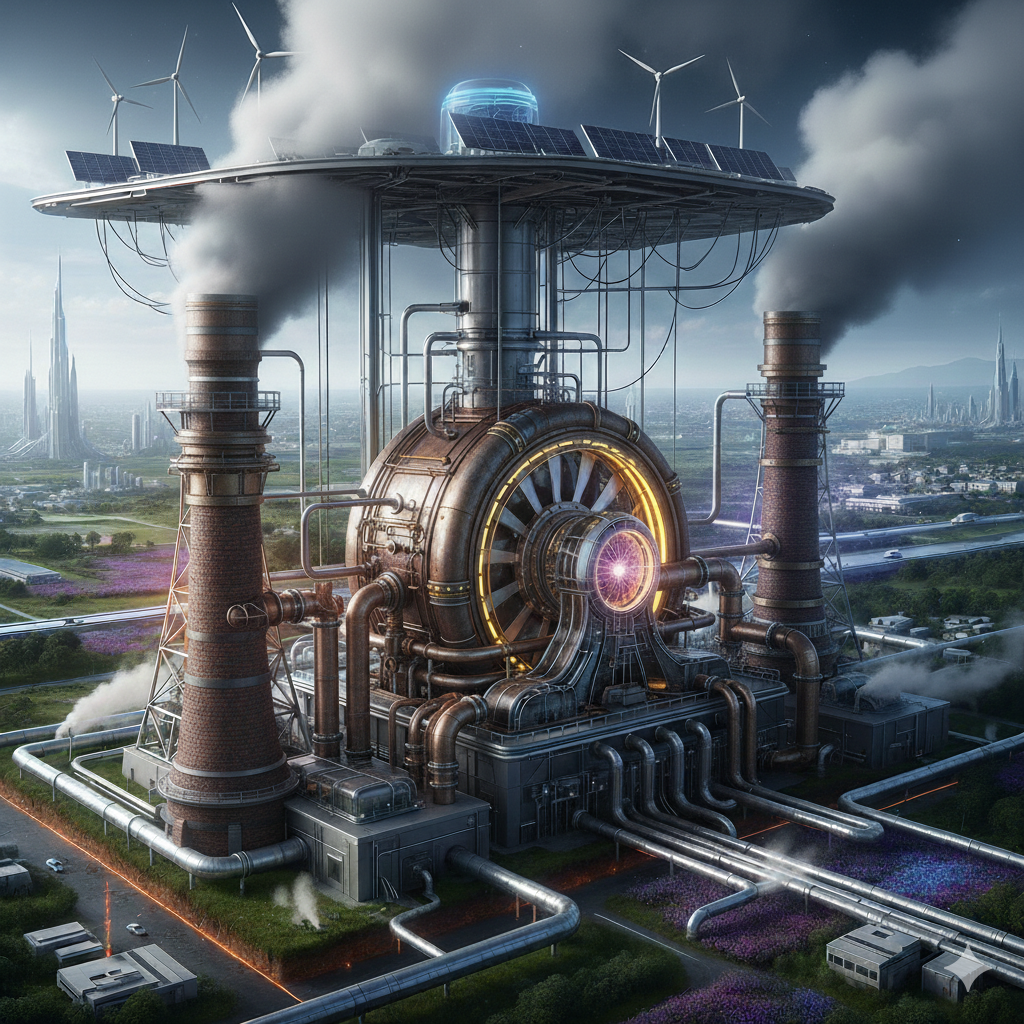
Yes, you read that right. Humanity’s most advanced energy facility, which replicates the processes that occur inside stars, ultimately comes down to heating water.
This is not a joke or a dystopian scenario. This is the most likely future of our energy sector.

Share
You might be interested in
-
🔒 Deepfakes in war. When the news anchor doesn’t exist
The war in the Middle East has been fought on the traditional and informational fronts since the beginning. And the latter has turned out to be the most intense test of deepfake…

-
🔒 Cosmic brain lottery
Why aliens may be either as boring as rhinos or so intelligent that we won’t survive it

-
🔒 Sex that drives innovation: the role of the adult industry in technological development (and AI)
For decades, the adult industry has served as an unofficial test lab for solutions that later enter the mainstream. Pornography is one of the most effective accelerators of technological innovation in history.

-
🔒 Nanotechnology: between DNA origami and gray goo
Back in 1986, when E. Drexler was scaring the world with the idea of “gray goo”—self-replicating nanobots devouring the biosphere after being accidentally released into the environment—it was hard to imagine that…