

🔒 Get to work
A robot will bring you coffee. Just make sure you know who you’re going to drink it with, because drinking alone, as we all know, isn’t good for you.
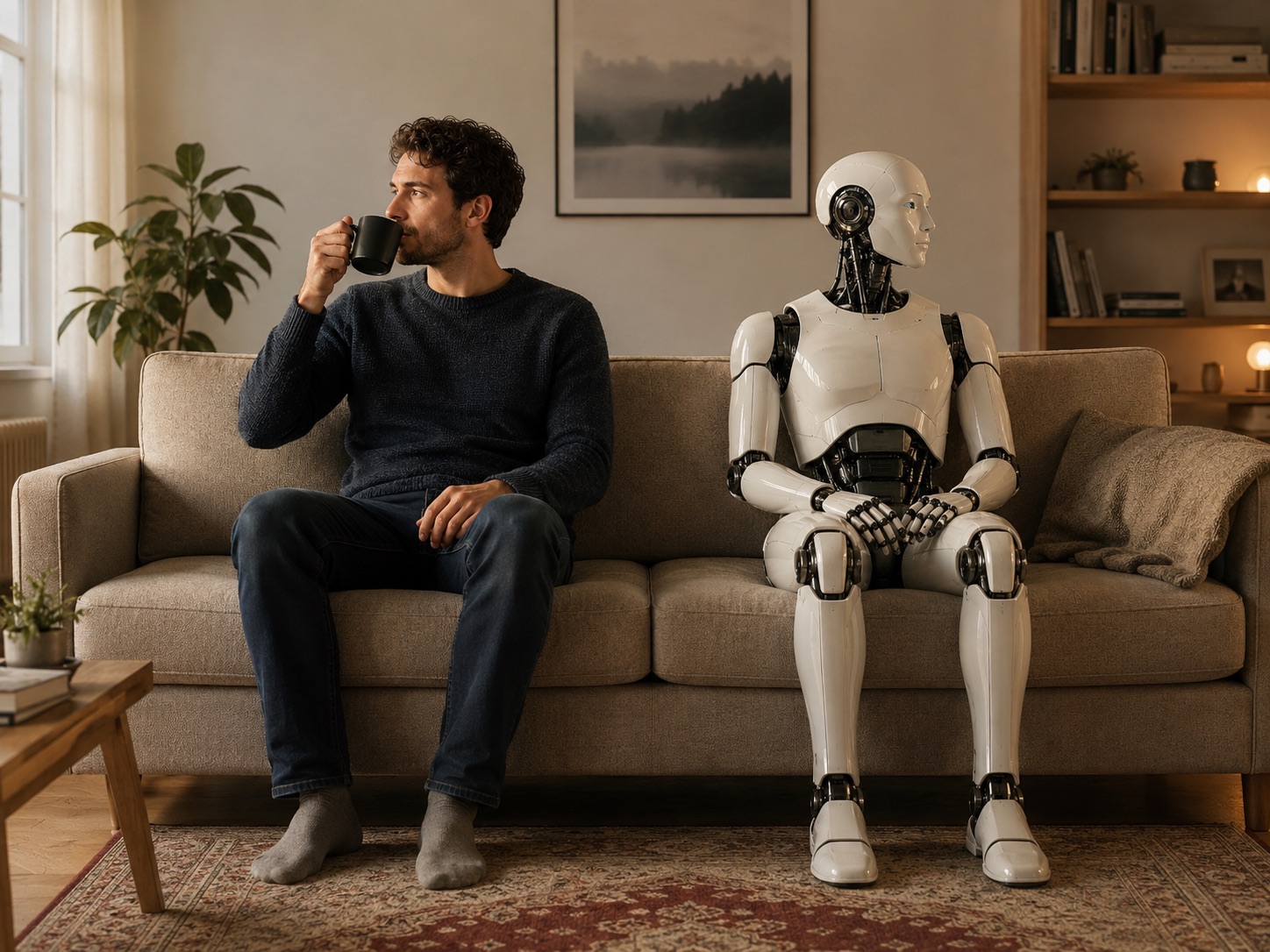
The word “robot” is 105 years old, and it meant something unpleasant from the very beginning. Karel Čapek borrowed it from the Czech “robota”, meaning forced labor, and put it into his 1920 play R.U.R. His robots aren’t metal machines but artificial people, mass-produced to do our work for us. The play ends wonderfully: rebellion, slaughter, the extinction of humanity. The moral was clear. Sooner or later, the servant class will refuse to obey.
A century later, the servant really is rolling off the production line, and at a price Čapek could hardly have imagined. The basic version of Unitree’s G1 costs about $13,000, less than a decent small car. 1X has put its Neo humanoid up for preorder: $20,000 to own or $499 a month by subscription, with deliveries scheduled to begin this year. Musk is promising Optimus for $20,000–$30,000, although for now Tesla only assembles it in its own factory and the actual production cost is many times higher. And, as is often the case with Musk’s promises, we’ll probably be waiting quite a while before we see anything that even partly resembles what was promised. Figure has gone after industry instead, renting its humanoids for work on BMW assembly lines and charging by the hour. Of the four, only Unitree and Neo are really targeting private homes, and both come with an asterisk: the G1 is a research platform that won’t make your coffee on its own, while Neo is only just entering the market. The expected arrival of humanoids in our homes is no longer measured in decades, but in delivery windows.
Share
You might be interested in
-
🔒 Brain in a box
When I tossed out my old laptop a few years ago, I didn’t give a thought to its possible suffering. Silicon is silicon. It cooled down and ended up in e-waste, case…

-
🔒 Pick a face, choose a voice
Imagine a Monday morning a few years from now. I get up, I don’t shave (as usual), but before I head out, I open an app and set my public profile to…
-
🔒 Sovereignty for rent
You can regulate machines you didn’t build and ride in cars you don’t drive—for a while. Sovereignty you don’t build is for rent. And any lease can be terminated.

-
🔒 Whose is your twin?
Imagine a scene from the near future. You go to the doctor with chest pain. Instead of immediately referring you for additional tests, the doctor runs a simulation on your “digital twin”…