


🔒 Deepfakes in war. When the news anchor doesn’t exist
The war in the Middle East has been fought on the traditional and informational fronts since the beginning. And the latter has turned out to be the most intense test of deepfake capabilities we have seen so far.
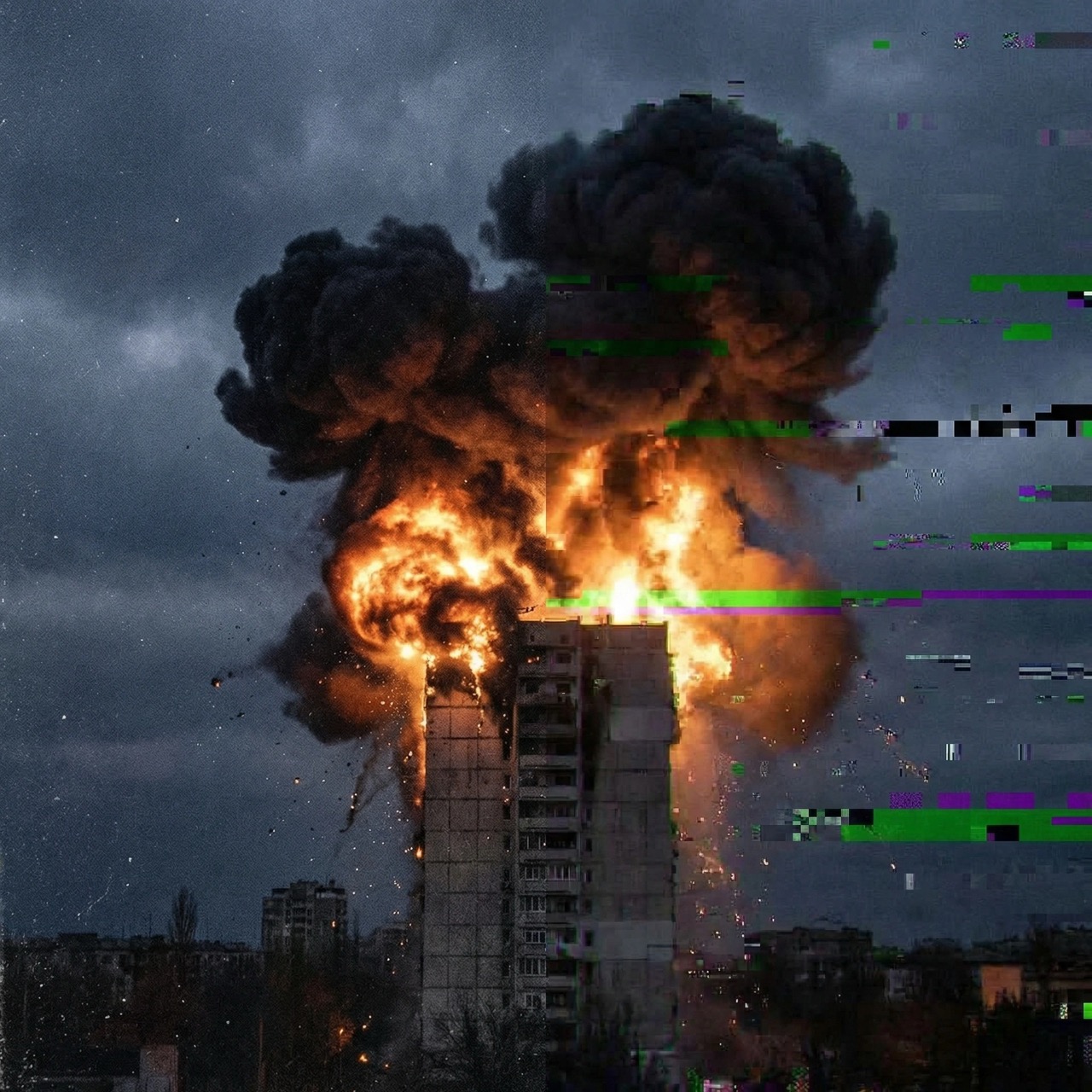
In December 2023, residents of Dubai turned on their televisions and saw the news. The anchor spoke calmly and professionally, with an appropriate degree of seriousness. Except that this anchor never existed. He was entirely generated by artificial intelligence, and the broadcast itself was fabricated by the Cotton Sandstorm group, linked to Iran’s Islamic Revolutionary Guard Corps (IRGC). Hackers hijacked the IPTV signal and replaced the programming with propaganda about the conflict in the Gaza Strip. Viewers in the UAE, Canada and the United Kingdom saw something that the Microsoft Threat Analysis Center (MTAC) later described as the first Iranian influence operation in which AI was a key component of the messaging (Microsoft Threat Analysis Center, 2024).
This incident should be treated as a turning point, not because deepfakes are something new, but because, for the first time, a state actor combined a cyberattack (the takeover of broadcasting infrastructure) with generative AI in one cohesive operation. This is qualitatively different from social media trolling.
Share
You might be interested in
-
🔒 Get to work
A robot will bring you coffee. Just make sure you know who you’re going to drink it with, because drinking alone, as we all know, isn’t good for you.

-
🔒 Brain in a box
When I tossed out my old laptop a few years ago, I didn’t give a thought to its possible suffering. Silicon is silicon. It cooled down and ended up in e-waste, case…

-
🔒 Pick a face, choose a voice
Imagine a Monday morning a few years from now. I get up, I don’t shave (as usual), but before I head out, I open an app and set my public profile to…

-
🔒 Sovereignty for rent
You can regulate machines you didn’t build and ride in cars you don’t drive—for a while. Sovereignty you don’t build is for rent. And any lease can be terminated.