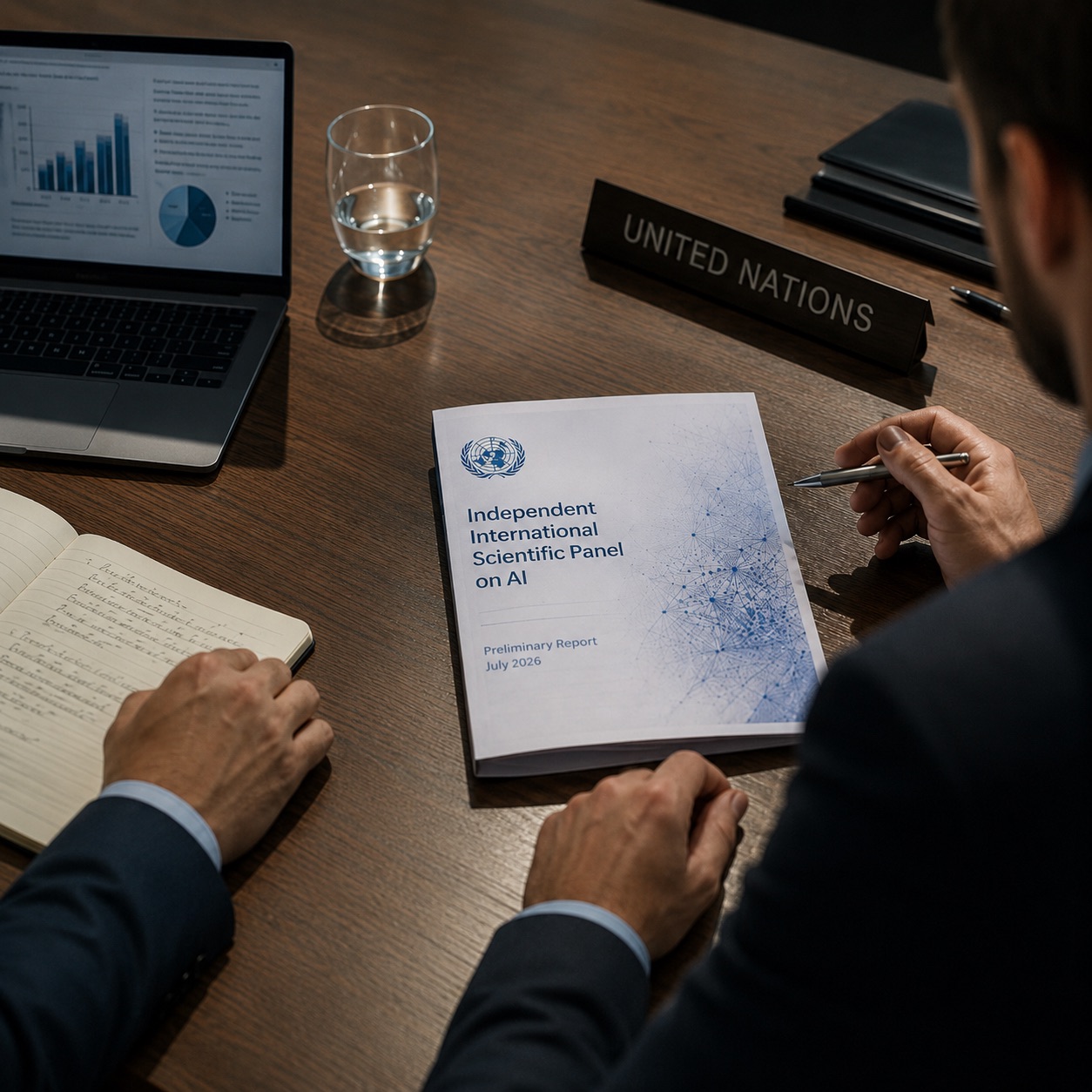


🔒 Regulatory straitjacket or digital shield? Two visions for the future of AI
The world is facing a dilemma: whether to keep AI in check with regulations, or to trust free-market mechanisms and legal liability. For businesses, this means calculating whether it is more cost-effective to invest in risk prevention or in insurance policies that protect against its consequences.

Although the race for parameter counts and computing power is in full swing in the tech giants’ laboratories, market reality has changed significantly. The phase of fascination with the capabilities of generative AI has given way to a sober review of invoices. Both technology providers and their business clients have stopped asking “what can this model do?” and started asking: “is it compliant with the law, safe for data, and when will the investment pay off?”
For management, the priority is no longer the speed of deployment but its predictability. The market is moving toward stability—companies are seeking legal frameworks that allow them to turn technological chaos into profitable and scalable processes. In this context, the debate over regulation is no longer an academic dispute but a struggle over the shape of those frameworks. Should the state assume the role of the “chief architect of security,” certifying every algorithm before it reaches the market? Or should it remain a “night watchman” that intervenes only after harm occurs? The answer to this question will determine whether corporate budgets in the coming decade are fueled by innovation or drained by compliance departments and legal services.

Share
You might be interested in
-
🔒 How far are we from AGI? It depends on who’s measuring
AGI has long been the goal of the world’s biggest AI labs. The problem is that OpenAI, Google DeepMind, Anthropic and Chinese players don’t always mean the same thing when they talk…

-
🔒 First they deploy AI. Then they ask if it’s legal.
Many organizations can’t tell whether their use of AI involves processing personal data, or whether they’re prepared for it. The problem starts when questions about legal compliance come up only after a…
-
🔒 The invisible trace: debate over AI text watermarks
Anthropic wants to leave an invisible, machine-detectable trace in texts generated by Claude. Is that a step toward greater transparency or an unfair generalization?
-
🔒 The end of reading tea leaves? AI regulations (will be) based on facts
For years, the AI debate has been driven by big promises and equally big warnings that often couldn’t be confirmed. The UN is now trying to build a scientific evidence base that…